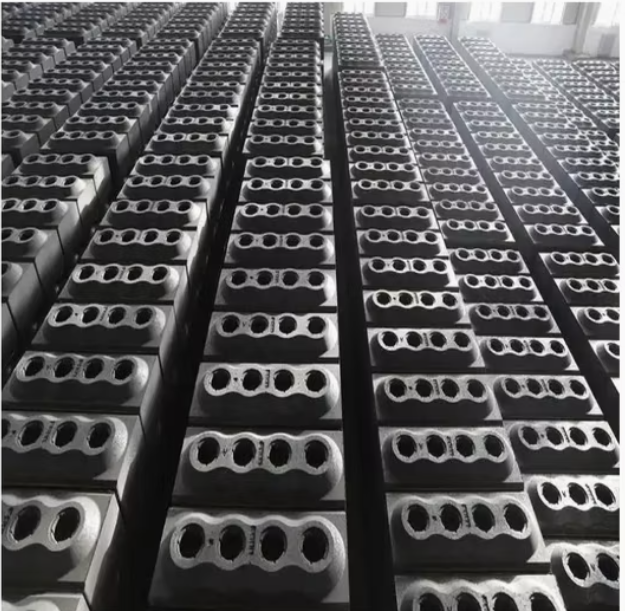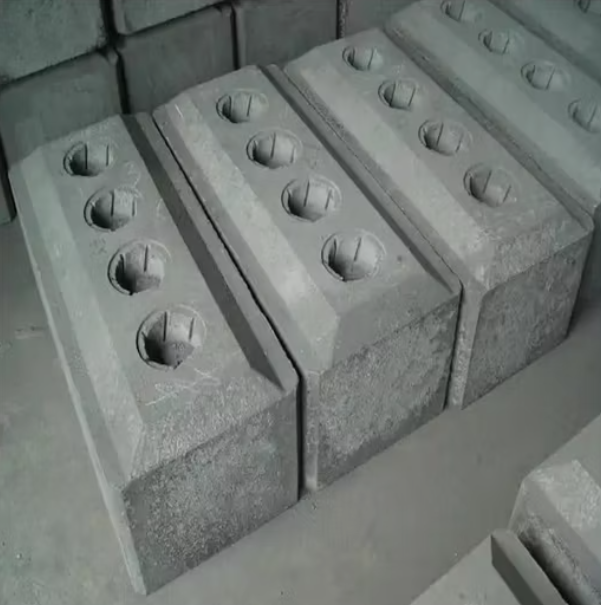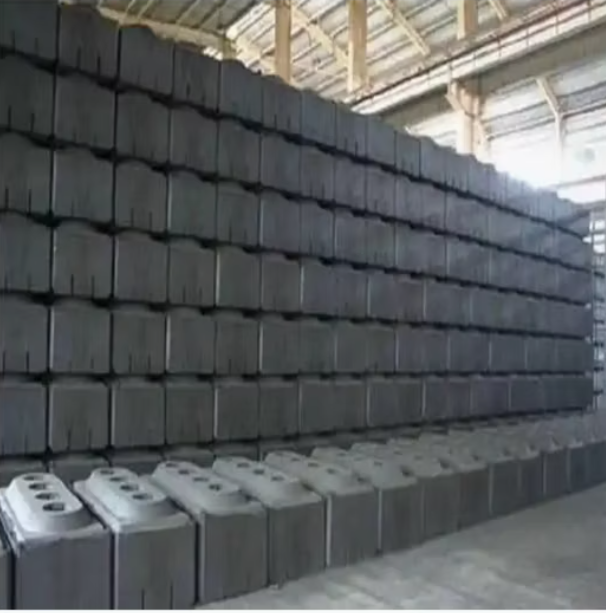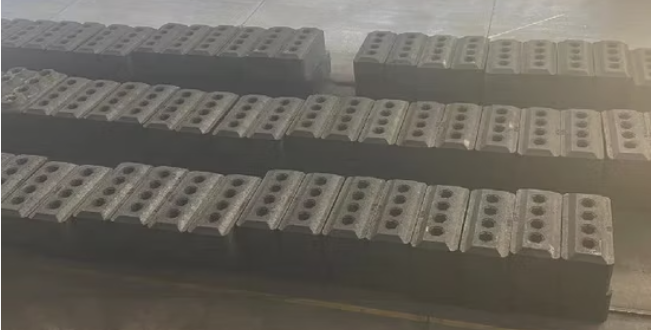

PREBAKED ANODE
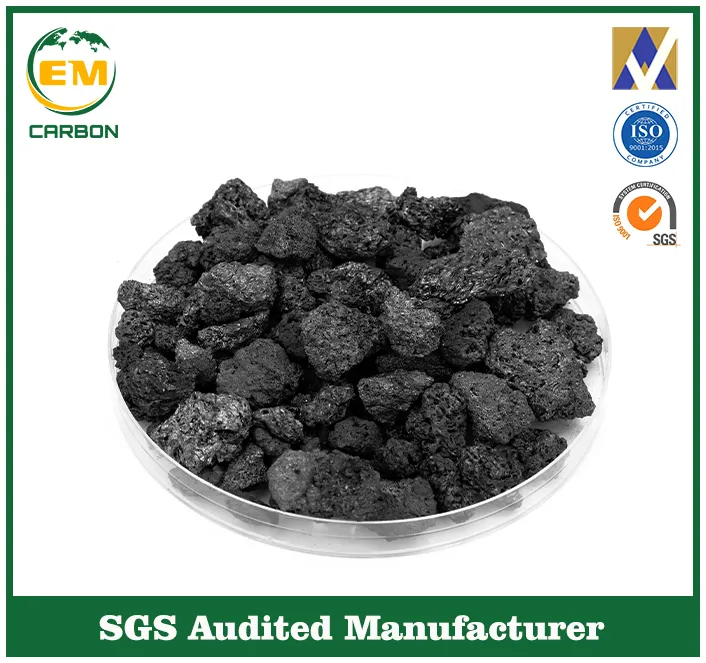
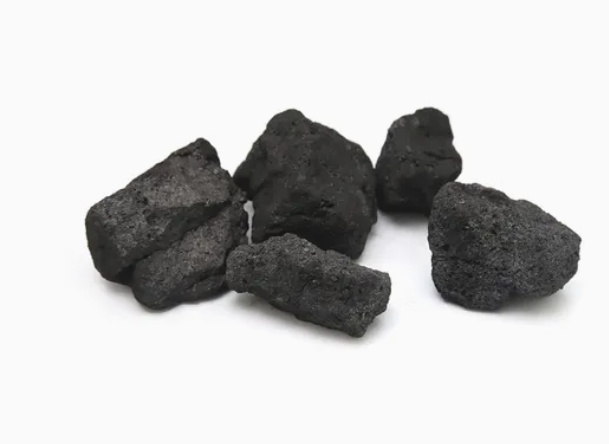
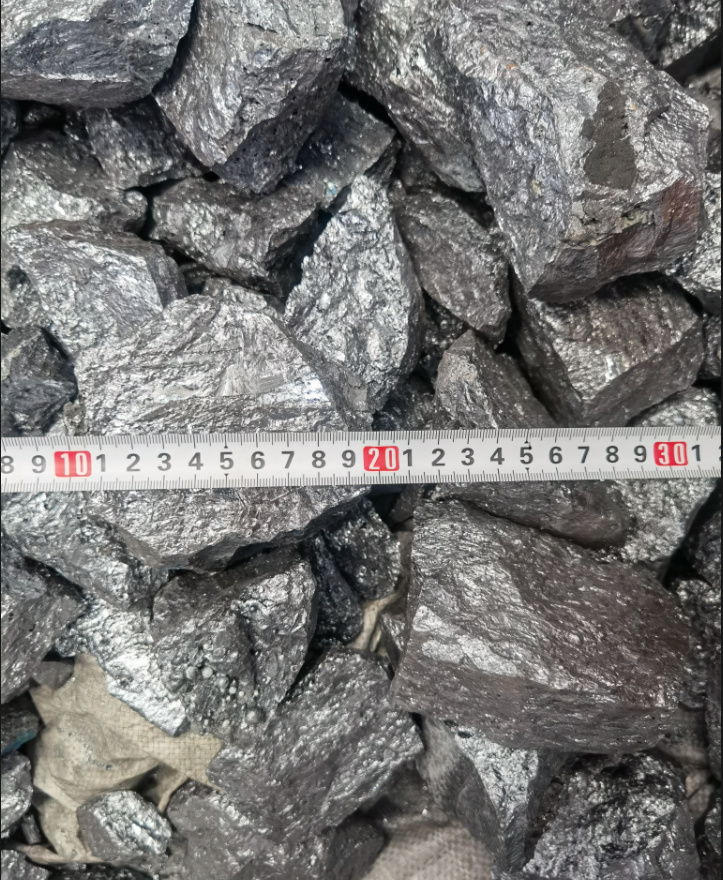
Prebaked Anode is a kind of carbon anode material used for aluminum electrolysis production, it is made of carbon block by high temperature roasting, with high conductivity, high temperature resistance, low resistance and low ash and other characteristics. In an aluminum electrolytic cell, the prebaked anode acts as a conductive electrode and reacts with the electrolyte and electrolytic aluminum to provide current conduction and participate in the oxidation reaction.
Production process of prebaked anode:The pre-baked anode is made of petroleum coke and pitch coke as aggregates and coal pitch as the binder, and is used as the anode material for the pre-baked aluminum electrolytic cell. This kind of carbon block has been roasted and has a stable geometric shape, so it is also called a pre-baked anode carbon block, which is also called a carbon anode for aluminum electrolysis.
The pre-baked anode is one of the main raw materials for the production of electrolytic aluminum. Each production of 1 ton of electrolytic aluminum consumes about 0.5 ton of pre-baked anode. It is not only the conductive anode of the electrolytic cell, but also participates in the electrochemical reaction. It is called the pre-baked aluminum electrolytic cell. "Heart", its quality has a great impact on the economic benefits of electrolytic aluminum production, and it is an irreplaceable bulk material for the current aluminum smelting process.
Features of prebaked anode:
1.Strong conductivity: low resistivity, improve electrolytic efficiency, reduce energy consumption.
2.High temperature resistance, oxidation resistance: stable operation in high temperature electrolytic environment, low loss rate.
3.Compact structure, corrosion resistance: reduce anode consumption, improve the service life of the electrolytic cell.
4.Low ash, low impurities: reduce the content of impurities in aluminum products, improve the purity of aluminum.
Main uses of pre-baked anode:
1.Electrolytic aluminum industry: Used in the Hall-Heroult electrolysis Process, as an anode material, and the electrolyte to release oxygen, to achieve the reduction of alumina into metal aluminum.
2.Carbon industry: as a raw material for electrodes, electrode pastes and other products.
3.Other uses: Some conductive materials used in metallurgy, chemical industry and other industries.
|
Item |
GS-1 |
GS-3 |
GS-5 |
GS-10 |
|
Real Density |
≥1.91 g/cm3 |
≥1.95g/cm3 |
≥1.99 g/cm3 |
≥2.08 g/cm3 |
|
Apparent Density |
≥1.56 g/cm3 |
≥1.57 g/cm3 |
≥1.57g/cm3 |
≥1.59 g/cm3 |
|
Resistivity |
≤39 uΩ.m |
≤35 uΩ.m |
≤30 uΩ.m |
≤21 uΩ.m |
|
Compressive Strength |
≥32 Mpa |
≥24 Mpa |
≥24 Mpa |
≥26 Mpa |
|
Ash |
≤8% |
≤5% |
≤4% |
≤2% |
|
Flexural Strength |
≤10.0 MPa |
≤7.0 MPa |
≤7.0 MPa |
≤7.5 MPa |
|
Young's Modulus |
≤10.0 GPa |
≤7.0 GPa |
≤7.0 GPa |
≤6.5 GPa |
|
CTE(300ºC) |
≤4.2 |
≤4.0 |
≤4.0 |
≤4.0 |
|
Sodium Expansion Rate |
≤1.0% |
≤0.8% |
≤0.7% |
≤0.5% |