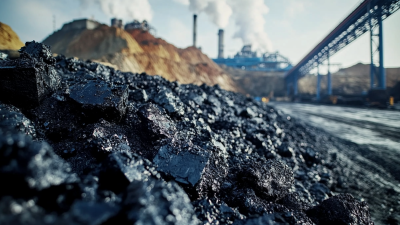
With the 139th Canton Fair just around the corner, everyone’s talking about Petroleum Coke more than ever. It’s happening from April 15 to May 5, 2026, and it’s a big deal because all sorts of industry innovations get showcased. I recently heard from Dr. Michael Thompson, a well-respected expert in the Petroleum Coke world, who said, “The future of Petroleum Coke is really about sustainable production and finding new, innovative uses.” Pretty inspiring, right?
One exciting thing this year is the use of AI tech at the fair, which is set to change how buyers find suppliers. Now, folks can quickly locate suppliers of Refinery Coke Petroleum Coke that carry the right certifications, like ISO and CE. And let’s be honest, navigating an exhibition that covers a massive 1.55 million square meters can be a bit overwhelming — so this tech is a real game-changer.
That said, it’s not all perfect. Even with all these technological advances, some suppliers still aren’t super transparent about where their products come from. That’s a concern for many, because trust is everything in this industry. The good news is, the fair provides a great platform to chat about these issues and push for more sustainable, honest practices. It’s all about moving forward, right?

China's Role in the Global Petroleum Coke Market
China has become a major player in the global petroleum coke market. As demand rises, the focus on quality and production efficiency is crucial. Companies are investing in technology to enhance refining processes. This shift helps meet both local and international standards.
China's vast resources contribute to its competitive edge. The country is increasing its production capacity to cater to global markets. However, this rapid growth also raises questions about sustainability and environmental impact. Striking a balance is essential.
**Tips:** Always evaluate supplier practices. Sustainability in refining processes should be a priority. Look for suppliers that support eco-friendly initiatives. While quality is important, investigating the entire supply chain can lead to better choices. In the competitive world of Wholesale Refinery Coke Petroleum Coke, it’s vital to ensure responsible sourcing and production methods.
China Best Petroleum Coke at the 139th Canton Fair 2026? - China's Role in the Global Petroleum Coke Market
| Region |
Production Volume (Million Tons) |
Export Volume (Million Tons) |
Price per Ton (USD) |
Market Share (%) |
| China |
50 |
20 |
150 |
35 |
| USA |
25 |
10 |
180 |
25 |
| India |
15 |
5 |
120 |
15 |
| Brazil |
10 |
3 |
170 |
10 |
| Russia |
30 |
15 |
160 |
20 |
Overview of Petroleum Coke Production and Uses
Petroleum coke, often known as petcoke, is a byproduct of oil refining. The production process leaves behind a solid material rich in carbon. This substance is primarily used in the production of electrodes for steelmaking and aluminum industries. It can also serve as a fuel source due to its high calorific value, making it a valuable commodity.
The production of petroleum coke, however, comes with challenges. Not all petcoke is suitable for industrial uses. Quality can vary widely, affecting its efficiency and safety. While many producers focus on manufacturing high-grade coke, there remains a significant market for
Cheap Refinery Coke Petroleum Coke. This type may appeal to industries looking for cost-effective solutions for fuel or other applications.
Yet, concerns about environmental impact linger. The combustion of lower-grade petcoke can lead to higher emissions. Companies must consider these aspects in their production strategies. Finding the balance between efficiency and environmental responsibility is crucial for future development in this field.
Highlights of the 139th Canton Fair
The 139th Canton Fair is a significant event for various industries. This year, it showcases the best in petroleum coke. Buyers from around the globe gather to explore opportunities. The fair promises to highlight innovative products and technologies.
Participants can expect to find a range of exhibitors. Each booth offers unique insights into petroleum coke usage and applications. Some highlights include its role in energy production and manufacturing. Attendees will see first-hand how this material is evolving. It’s exciting yet challenging to keep up with industry demands.
There might be changes in market trends, making it essential for businesses to adapt. Companies need to reflect on their strategies. Engaging discussions can lead to new collaborations. The fair is a platform for fostering connections and sharing knowledge. Challenges abound, but so do opportunities for growth.
Showcase of Chinese Petroleum Coke Manufacturers
The 139th Canton Fair in 2026 is set to highlight Chinese petroleum coke manufacturers. This event will bring together top producers and suppliers. Visitors can expect an extensive showcase of petroleum coke, a vital material in various industries. It acts as a key ingredient in aluminum, cement, and steel production.
Many manufacturers are eager to display their latest products. They aim to attract global buyers looking for reliable sources of quality petroleum coke. The diversity in product quality is notable. Some products may lack consistency, raising concerns among potential buyers. It is essential to assess the specifications carefully. Potential buyers should consider the performance of these products within their applications.
The fair also offers opportunities for networking. Due to the growing demand for Best Refinery Coke Petroleum Coke, conversations about supply chains will be common. This essential material needs to be routinely evaluated for quality and applicability. Manufacturers may face challenges in meeting stringent international standards. These discussions can lead to improvements in production practices. This way, manufacturers can refine their processes for better outcomes.
Key Innovations and Technologies in Petroleum Coke
The 139th Canton Fair in 2026 is set to showcase cutting-edge innovations in petroleum coke. This material is integral to various industries, especially in energy production. Emerging technologies promise enhanced efficiency in its production process. Sustainable practices are gaining traction. Companies are exploring alternative methods that reduce carbon footprint.
A notable trend is the integration of advanced carbon capture systems in manufacturing. These innovations strive to minimize environmental impact without sacrificing quality. Some strategies are still in development. They need to address certain challenges, such as cost and scalability.
As we witness these innovations, it's essential to reflect on gaps in industry practices. Not every method is equally effective. Some technologies may require additional testing. The path to sustainable petroleum coke production is not yet clear. The sector must embrace trial and error as it moves forward.
China Best Petroleum Coke at the 139th Canton Fair 2026
This chart illustrates the projected production volume and market distribution of petroleum coke across different regions in 2026, highlighting key innovations and technologies in the sector.
Networking Opportunities at the Canton Fair
The 139th Canton Fair is set to be a hub of interaction. It provides a unique chance for professionals to connect. Attendees can meet industry leaders and explore new partnerships. This fair has a vibrant atmosphere that stimulates networking. The diverse participants make it easy to find common interests.
The layout encourages informal discussions. Many booths offer comfortable spaces for conversations. Networking opportunities arise at every corner. Some might struggle to approach strangers at first. That's normal; breaking the ice takes practice. Engaging with others can lead to valuable insights. A simple smile or open gesture can create connections.
Moreover, the fair’s schedule is packed with events. Seminars and workshops present fresh ideas. Attending these sessions can spark new collaborations. Though it may feel overwhelming, it’s also exciting. The energy of the crowd fuels creativity. Being open to serendipity can lead to unexpected results. Embrace the imperfections of networking; they often lead to growth.
Future Trends in Petroleum Coke Industry and Trade
The petroleum coke industry is undergoing significant changes. Recent reports suggest the global petroleum coke market is projected to reach USD 46 billion by 2027. This growth is driven by increasing demand from key industries. The aluminum and metal sectors are strong contributors, with petroleum coke as a vital production element.
In 2026, shifts in energy policy will impact trade. Countries are considering carbon footprints more seriously. This could affect the sourcing of petroleum coke. China remains a key player in the market. Producers are adapting to changing regulations by focusing on cleaner production methods.
At the same time, the surge of Discount Refinery Coke Petroleum Coke raises questions about quality standards. Lower prices may attract market interest. However, potential impacts on product integrity cannot be overlooked. Stakeholders must evaluate risks versus cost benefits. The path forward involves balancing growth with sustainability in the petroleum coke sector.
Optimizing Steel Manufacturing with High-Quality Calcined Petroleum Coke: A Comprehensive Guide to CPC 1-5mm, 1-3mm, and 1-4mm
In the realm of steel manufacturing, the choice of materials plays a crucial role in determining the quality of the final product. High-quality calcined petroleum coke (CPC) emerges as an essential ingredient for optimizing steel production, particularly in the special steel smelting and precision casting processes. By carefully selecting the appropriate grain sizes, such as 1-5mm, 1-3mm, and 1-4mm, manufacturers can achieve precise control over the properties of the steel being produced. CPC serves not only as a carburizer but also as an inoculant, allowing for improvements in structural integrity and overall performance.
The production of graphitized petroleum coke involves a sophisticated process where calcined petroleum coke is subjected to high temperatures of at least 2600 degrees. This transformation leads to fully graphitized material that delivers enhanced properties, such as increased electrical conductivity and lower sulfur content, which is vital when dealing with ductile iron and grey iron casting. The availability of various particle sizes, ranging from 0-50mm, ensures that manufacturers can tailor their material to meet specific application needs, thereby optimizing the overall production process and ensuring compliance with stringent quality standards.
Moreover, graphitized petroleum coke contributes to various applications beyond steel manufacturing, including use as a reduction agent in nuclear reactors and as an absorbent for heavy metals in wastewater treatment systems. Its versatility and high-quality characteristics reinforce its significance in advancing not only steel production but also other critical industrial processes.
FAQS
: China is now a major player with increased production and demand for quality.
Quality ensures products meet both local and international standards.
Investments in technology enhance refining processes for better efficiency.
Vast resources give China a competitive edge in production capacity.
Yes, sustainability and environmental impacts are critical considerations.
Look for suppliers that prioritize sustainability and eco-friendly practices.
Attendees will find innovative products and technologies in petroleum coke.
Events enable networking and sharing knowledge to adapt to market trends.
Companies must adapt to changing demands and reflect on strategies regularly.
It aids in making informed choices about responsible sourcing and production.
Conclusion
The article explores China's significant role in the global petroleum coke market, highlighting its production capabilities and diverse applications. With an emphasis on the recent 139th Canton Fair, the piece outlines the event's importance in showcasing prominent Chinese petroleum coke manufacturers and the innovative technologies they are developing. Attendees had valuable networking opportunities, facilitating connections that may shape future business relations in the petroleum coke industry.
Additionally, the article discusses emerging trends in petroleum coke trade, hinting at the evolving landscape driven by advancements in technology and market demands. As global industries increasingly rely on petroleum coke, understanding these dynamics will be crucial for stakeholders looking to thrive in this sector.